


Medical Billing and Coding in New Jersey: Is It the Right Healthcare Career for You?
Not everyone who wants a healthcare career wants to draw blood or lift patients. Medical billing and coding lets you build a stable career in healthcare from behind a desk. Every visit, test and procedure has to be translated into codes before a provider gets paid. Here is what the job really involves, which certification to aim for, and how to get started in New Jersey.

Billing vs. coding: two halves of one job
Medical Coding | Medical billing |
Reads clinical documentation and assigns standardized codes | Uses those codes to build and submit claims to insurers |
Works with ICD-10-CM (diagnoses), CPT (procedures) and HCPCS Level II (supplies, drugs, services) | Works with payers, explanation-of-benefits forms denials and patient balances |
Accuracy and documentation rules are the core skill | Follow-up, persistence and communication are the core skills |
In smaller practices, one person often does both. In hospitals and billing companies, the roles are usually split.
Is this career a good fit for you?
You'll likely enjoy billing and coding if you:
Like detail work and solving puzzles. You're matching documentation to rules.
Want a healthcare career without hands-on patient care.
Prefer predictable, weekday office hours.
Are comfortable working on a computer most of the day.
Don't mind ongoing learning. Code sets are updated every year.
It may not be the right fit if you want variety, movement, and direct contact with patients. Our CNA, PCT andMedical Assistant programs may suit you better.
Which certification should you get?
Credential | Issued by | Best for |
CPC (Certified Professional Coder) | AAPC | Physician-office and outpatient coding. The most widely requested coding credential in job postings. |
CBCS (Certified Billing & Coding Specialist) | NHA | Entry-level roles that combine billing and coding |
CCA (Certified Coding Associate) | AHIMA | Entry-level coding, especially in hospital settings |
For most new graduates, the CBCS or CPC is the practical first credential. New CPC holders without work experience carry an apprentice designation (CPC-A), which is removed once they document qualifying experience.
The truth about "work from home on day one. " Many coders do work remotely, but employers usually want proven accuracy first. The most reliable path is to start in an on-site role, such as front desk billing, a practice's billing office, or a hospital registration-to-billing track, then move to remote coding after you build a track record. Programs that promise instant remote jobs are overselling. |
How to get started in New Jersey
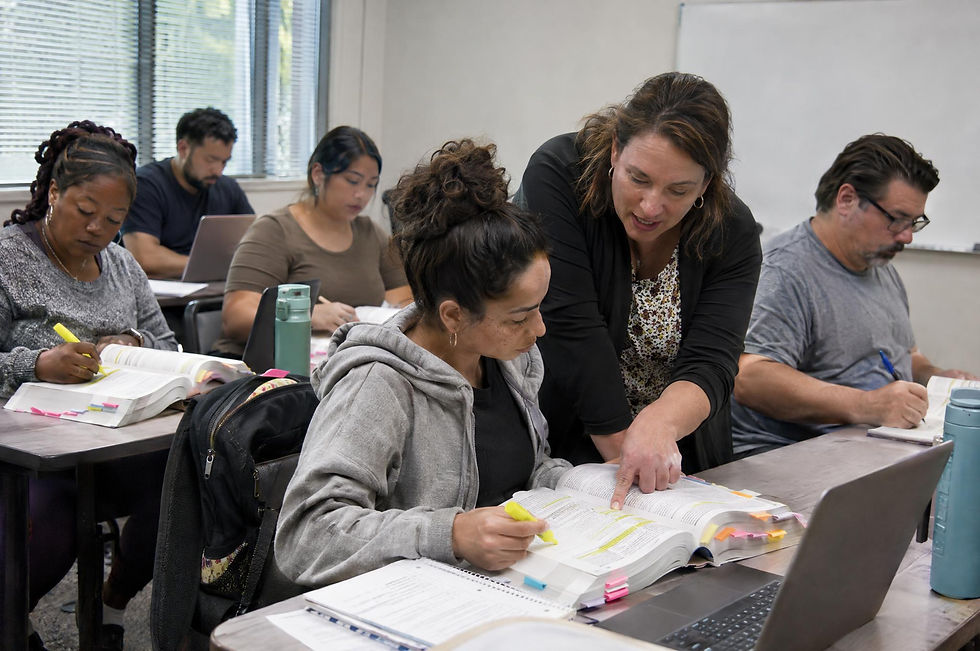
Train with a structured program that covers medical terminology, anatomy, ICD-10-CM, CPT, HCPCS, insurance and claim workflows, and compliance (HIPAA).
Practice on real-world case scenarios, not just multiple-choice questions. Coding is a reading skill.
Sit for your certification exam while the material is fresh.
Get your foot in the door at physician groups, hospital systems, labs, billing companies and insurance carriers across North and Central Jersey.
Keep your credential active with continuing education units (CEUs) and the annual code updates.
A smart combination: Medical Assistant plus billing
Medical assistants who also understand billing and coding are especially valuable to small practices, because they can move between clinical work and the front office. If you aren't sure whether you want clinical or administrative work, ask our admissions team about pairing the Medical Assistant (CCMA) and Medical Billing and Coding programs.
Frequently asked questions
Do I need health care experience to start?
No. Programs start with medical terminology and anatomy. Strong reading comprehension and comfort with computers matter more than prior experience.
Is medical coding being replaced by AI?
Software increasingly suggests codes, but humans still validate them, handle complex cases, manage denials and keep the work compliant. Coders who understand both the rules and the tools are best positioned.
Can I get help paying for training?
Eligible New Jersey residents may qualify for WIOA funding through a One-Stop Career Center for programs listed on the NJ Training Explorer. Contact our Financial Assistance team to check whether you're eligible.
How is ACE different from an online-only course?
ACE is an accredited school (Middle States Association Commission) with two New Jersey campuses, live instructors, and community healthcare partners. That support matters when you're stuck on a coding scenarioor looking for your first job.
